
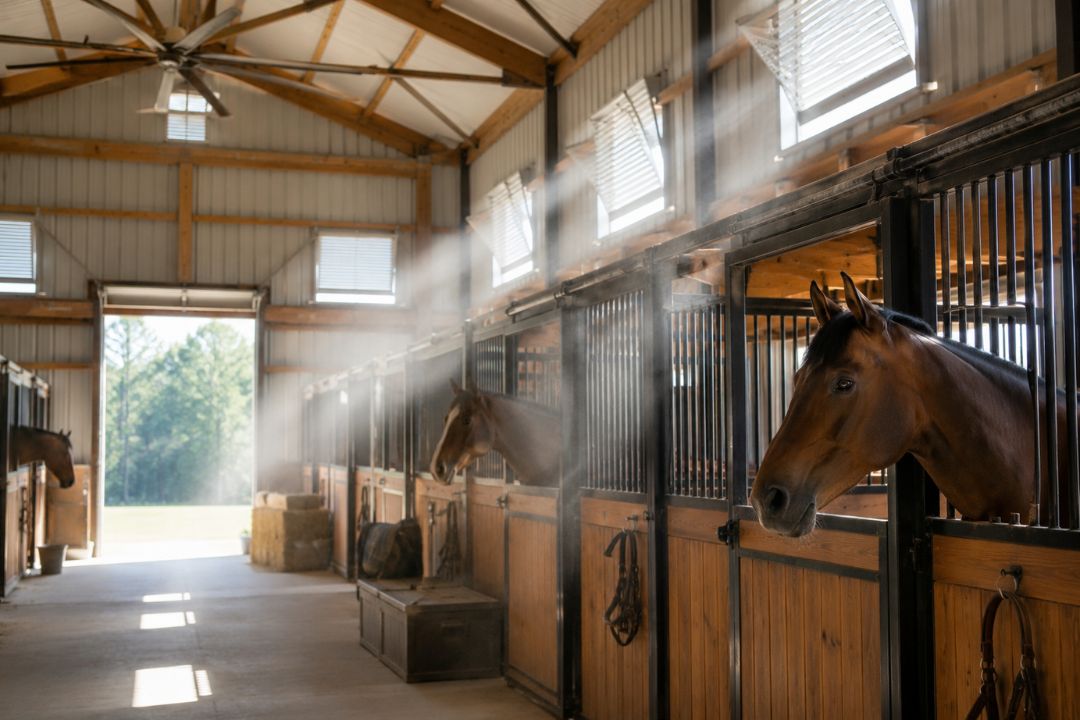
Ventilation Systems for Horse Barns
You may not think much about your barn’s ventilation, but proper airflow is one of the most important factors in keeping horses healthy. Good ventilation helps reduce moisture, dust, ammonia, and harmful airborne particles while creating a more comfortable environment year-round. Whether you’re building a new barn or improving an existing one, understanding how ventilation works can make a big difference in your horse’s health and well-being. Learn what every horse owner should know in this helpful guide from the University of Minnesota Extension.
Horse Stable Ventilation
Good ventilation is essential for keeping horses healthy, yet poor airflow remains one of the most common problems in modern barns. A well-ventilated stable should have fresh, clean air—not the smell of ammonia or manure. Proper ventilation helps protect respiratory health by removing dust, moisture, and airborne contaminants, creating a safer environment for both horses and their caretakers.
Installation of Mechanical Ventilation in a Horse Stable: Effects on Air Quality andHuman and Equine Airways
Installing a mechanical ventilation system improved barn air quality by reducing carbon dioxide, ammonia, dust particles, and horse allergens. The improved airflow also showed signs of reducing airway irritation in horses and may help support better respiratory health.
Key Findings Referenced
- Proper ventilation removes moisture, airborne contaminants, and ammonia.
- Improved air exchange can reduce respiratory irritation and airway inflammation.
- Air quality is a major factor in maintaining equine respiratory health.

